
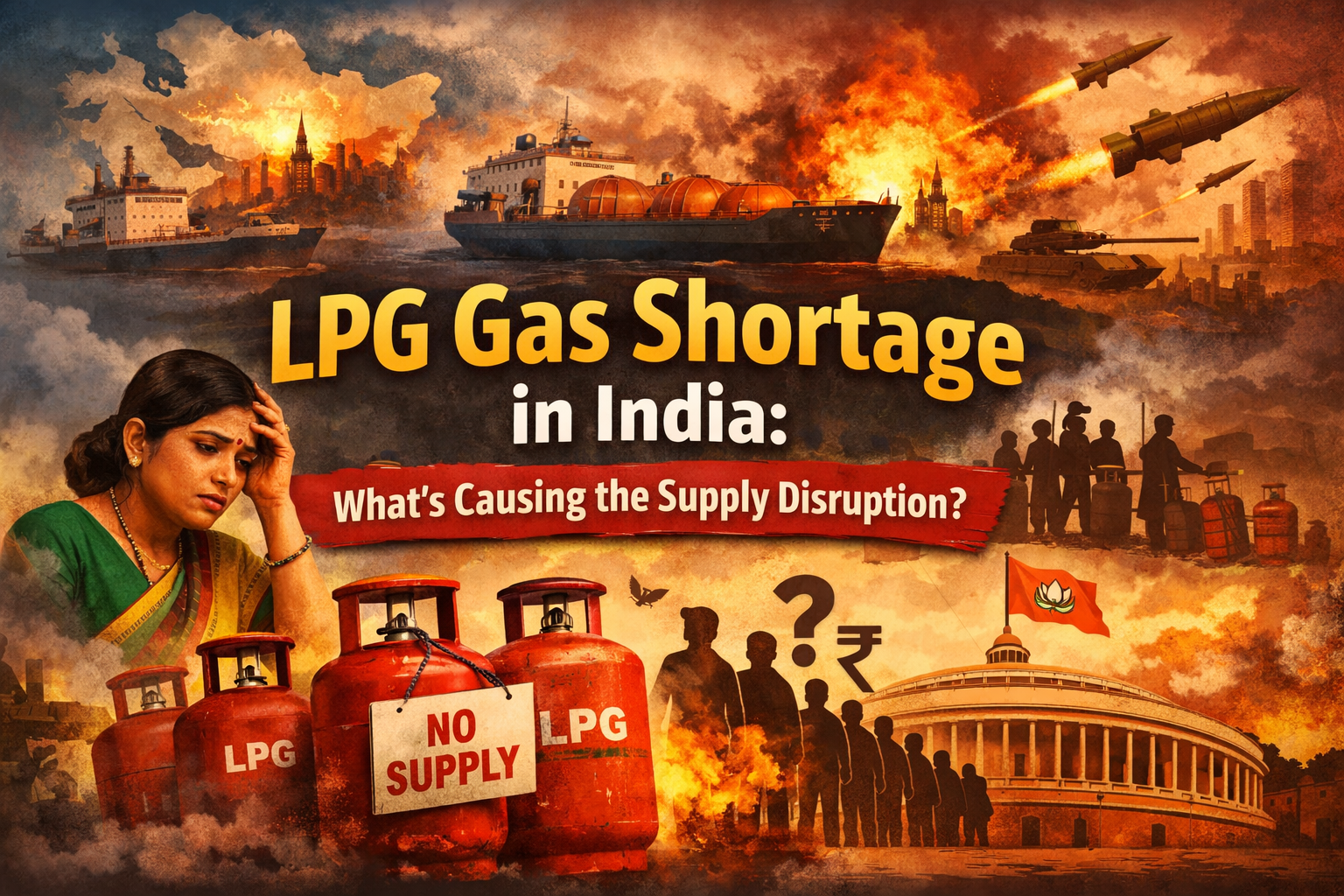
India is currently facing a serious LPG (Liquefied Petroleum Gas) shortage, creating problems for households, restaurants, and small businesses. From delayed deliveries to rising prices, the crisis is affecting daily life across the country.
One of the biggest reasons behind this disruption is the ongoing war situation in the Middle East, combined with internal demand pressures and policy challenges. Let’s understand the complete picture.
1. Impact of War in the Middle East
The ongoing war in the Middle East is the most critical reason behind the LPG shortage in India.
-
A large portion of India’s LPG imports comes from Gulf countries like Saudi Arabia, Qatar, and UAE
-
Most shipments pass through the Strait of Hormuz, a sensitive and conflict-prone route
Due to the war:
-
Shipping routes are disrupted
-
Tanker movement has slowed down
-
Export capacity of oil-rich nations is affected
👉 As a result, LPG supply to India has reduced significantly, creating a nationwide shortage.
2. India’s Heavy Dependence on LPG Imports
India depends heavily on imported LPG:
-
Around 60% of LPG demand is fulfilled through imports
-
Domestic production is not enough to meet rising demand
👉 When global supply is affected due to war or geopolitical tension, India faces immediate shortages.
3. Rising Demand Due to Government Schemes
The BJP government’s Pradhan Mantri Ujjwala Yojana (PMUY) has played a major role in increasing LPG usage:
-
Millions of free or subsidized LPG connections have been provided
-
Rural and low-income households have shifted from traditional fuels to LPG
👉 While this is a major achievement in clean energy adoption, it has also increased pressure on supply during crisis situations like war.
4. Supply Chain Disruptions
The war has also impacted global logistics:
-
Increased freight costs
-
Delays in shipping and unloading
-
Limited availability of LPG tankers
👉 Even when LPG is available, it is not reaching India on time.
5. Limited Storage Capacity in India
India lacks sufficient strategic LPG reserves:
-
No strong backup system during emergencies
-
Limited storage infrastructure
👉 Because of this, even short-term disruptions caused by war quickly turn into a nationwide crisis.
6. Government Response (BJP Government)
The BJP-led central government has taken several steps to control the situation:
✔ Increasing Domestic Production
Efforts are being made to boost refinery output of LPG
✔ Promoting Alternative Fuels
-
Push towards PNG (Piped Natural Gas)
-
Encouraging electric cooking options
✔ Supply Prioritization
-
Household supply is prioritized over commercial usage
👉 These steps aim to stabilize supply, but the impact of war still makes recovery slow.
7. Panic Buying and Black Marketing
Due to fear of shortage:
-
People are booking cylinders in advance
-
Black marketing is increasing in some regions
👉 This creates artificial scarcity and worsens the situation further.
8. Impact on Daily Life
🏠 Households
-
Delay in cylinder delivery
-
Difficulty in daily cooking
🍽 Businesses
-
Restaurants facing fuel shortages
-
Increased food prices
💰 Economy
-
Rising inflation
-
Burden on middle-class families
9. Future Outlook
If the war situation continues, LPG supply may remain unstable.
India needs to focus on:
-
Reducing import dependency
-
Increasing domestic production
-
Expanding PNG networks
-
Promoting electric cooking solutions
Conclusion
The LPG shortage in India is largely driven by the ongoing war in the Middle East, combined with high import dependence and rising demand. While the BJP government has taken steps to manage the crisis, long-term solutions are necessary to prevent such disruptions in the future.
Until then, consumers should use LPG wisely and stay updated with government advisories.